
Most articles about the beaches of South Lombok are written by people who visited three of them for an afternoon. Every bay is “pristine”, every beach is “hidden”, and none of them tell you the one thing you actually need to know: that a beach here can be extraordinary at eight in the morning and disappointing at eleven, or vice versa, depending entirely on the tide and the surf schools.
We live on this coast and run two private villas here, so we see the same beaches in every mood — off-season, mid-season, high tide, low tide, empty and busy. This guide is the version we give guests at breakfast when they ask where to go today. It is deliberately more opinionated than our beach-by-beach reference page, which lists the practical details for each one; here we are telling you which are genuinely worth the drive, when to go, and where you will be underwhelmed.
One honest note before we start. Every beach in Indonesia is public by law. There is no such thing as a private beach here, ours included. What varies is how many people actually turn up.
The short version
If you only have three beach days: Selong Belanak for the swim and the surf lesson, Mawun for the most beautiful single swim on this coast, and Tanjung Aan paired with lunch in Kuta. If you have longer, add Tampah for a walk and Mawi to watch surfing you would not want to attempt.
Selong Belanak
The one everybody comes for, and it deserves it. A long horseshoe of powder-fine white sand, backed by green hills, with water so gently shelved that you can walk out fifty metres and still be waist-deep. It is the best place in Indonesia to learn to surf, which is both its appeal and its problem.
Timing matters more here than anywhere. Between roughly ten in the morning and four in the afternoon, the middle of the bay belongs to surf schools — dozens of soft boards, instructors pushing beginners into whitewater, and a fair amount of shouting. It is cheerful rather than unpleasant, but it is not solitude. Come at sunrise and you will have a kilometre of empty sand and flat water. Come at sunset and the schools have gone home and the light is the best of the day.
Practicalities. Parking is at the back of the beach and there is usually a small fee. A dozen warungs sit along the treeline selling grilled fish, mie goreng, cold drinks and coconuts; standards vary but you will not go hungry. Shade is limited — the thatched parasols are rentable and worth the small cost, because the bay is long and there is almost no natural cover. Walk to the far western end if you want quiet without leaving the beach.
Who it suits. Families with children, non-swimmers, anyone wanting a first surf lesson. Our surf guide covers what to expect from a lesson here and how the conditions change through the year.
Pantai Serangan — our own stretch
We should be upfront about our bias: this is the beach our estate runs down to, and it is the reason we built where we did.
Pantai Serangan is a long, quiet strip of white-gold sand with an offshore reef that takes the sting out of the swell. It is broad at low tide and narrows considerably at high tide, which is worth knowing if you are planning a long walk. Almost nobody is here. Not because it is secret — it is on the map like anywhere else — but because there is very little accommodation along this stretch, so there is nobody to fill it. A handful of local fishermen in the morning, a few surfers heading to the break, and that is usually it.
For our guests, the walk down is about two minutes on a private path that stays on our own land, so you never actually leave the property to reach the sand. The Serangan surf break is roughly three minutes further along. To be clear: the beach itself is public, like all of them. It simply happens to be empty.
When it is at its best. Early morning at low tide, when the sand is at its widest and the water is glassy. Golden hour is the other one — the headlands catch the light and, most evenings, there is nobody to share it with.
Mawun
If you want one beach day that ends in a genuinely memorable swim, make it Mawun. It is a near-perfect crescent held between two steep green headlands, which shelter it so effectively that it stays calm when the rest of the coast is choppy. The water clarity on the right tide is the best in the area.
It sits about twenty minutes’ drive from us. There are two or three small warungs and very little else — no development, no beach clubs, no rows of loungers. Weekdays it is close to empty. Weekends bring Indonesian families and day-trippers, which is pleasant rather than crowded, but if you want the bay to yourself, go on a Tuesday.
One caution. The headlands make it look completely safe, and it usually is, but the centre of the bay can develop a pull on a big tide. Stay within your depth if you are not a confident swimmer. There are no lifeguards at Mawun — or at most beaches on this coast.
Tanjung Aan and the Kuta beaches
About thirty-five minutes east of us, past the Mandalika circuit, the coast changes character. This is the developed end of South Lombok: more hotels, more cafés, more people, and a lot more choice about lunch.
Tanjung Aan is the star — a long curving bay famous for its two-tone sand, coarse and peppery at one end and fine and white at the other. It is calm, shallow and easy to swim. It is also the busiest beach in the region: by ten in the morning in high season the car park is full and the loungers are out. Go early. Merese Hill, at the eastern end, is a short climb for one of the best sunset views on the island, and it is worth doing.
Kuta Lombok itself is a town beach — fine for a stroll and a drink, not the swim you drove for. The value of Kuta is the food and the atmosphere rather than the sand. If you make the drive, plan it as beach in the morning, lunch in town, Merese Hill at sunset. Our guide to eating in the area has more on where is actually good.
Honest verdict. Tanjung Aan is beautiful and worth one day. But if you have come to South Lombok for empty beaches, you will find them west of Kuta, not east.
Tampah
Around fifteen minutes from us, Tampah is a wide, cliff-framed bay that still feels genuinely wild. There is almost nothing here — no warungs to speak of, so bring water and something to eat. The reward is a long, beautiful, usually deserted stretch of sand and a superb late-afternoon walk.
Two honest caveats. First, the swimming is conditional: fine on calm days, but the bay picks up swell and current, so look at the water before you commit. Second, it is changing. A handful of small developments have started to appear on the surrounding land, and the Tampah of five years’ time will not be the Tampah of today. Go now.
The drive in passes the Don-Don viewpoint, which is worth the two-minute stop.
Mawi
Mawi is on this list for the view, not the swim. It is a heavy left-hand reef break, and the current is serious — this is a beach for watching, not for paddling. Non-surfers should treat it as a scenic stop rather than a beach day.
That said, it is one of the most striking pieces of coastline in South Lombok, and standing on the sand in the late afternoon while the line-up works is genuinely good entertainment. There is a small cluster of warungs at the access point. The road in has historically been rough in places; a scooter or a car with reasonable clearance makes it easier.
Are Guling
The one we would call optional. A small, quiet bay between Mawun and Selong Belanak, with gentle waves, a sandy bottom and no reef, so the swimming is easy. There is a warung or two and not much else. It is mostly visited by surfers heading to the right point break.
If your time is short, skip it. If Selong Belanak is heaving and you want somewhere calm within ten minutes, it is a very good answer to that specific problem.
Practical things nobody mentions
Tides. They matter enormously here. Several of these beaches double in width at low tide and shrink to a strip at high tide. Reef-fronted beaches are best avoided at very low water. Ask locally in the morning rather than guessing.
Getting around. Almost none of these beaches are walkable from one another. You will need a scooter, a car and driver, or a taxi. Some access roads are rough, and a few require confidence on a scooter. If you are not comfortable riding, hire a driver for the day — it costs little and removes the whole problem. Our getting-here guide covers arrival logistics and transfer times.
Food. Warung standards vary. As a rule, the busier the warung, the fresher the fish. Bring cash — cards are rarely accepted at beach warungs.
Sun and shade. There is very little natural shade on any of these beaches. Bring a hat and reef-safe sunscreen, and treat midday seriously.
Rubbish. Be prepared for the honest version: after heavy rain and on certain tides, some beaches collect plastic that has washed down the rivers or in from the sea. It varies week to week and beach to beach. This is not a reason to stay away; it is a reason not to expect a postcard every single day.
Season. The dry months from roughly May to October give the most reliable beach weather and the biggest surf. The green season is quieter, cheaper and often beautiful, with short heavy showers rather than all-day rain. Our when-to-visit guide breaks it down month by month.
Making a week of it
A comfortable rhythm for a week: Selong Belanak early on your first morning to get your bearings and, if you want it, a surf lesson. Mawun on a weekday for the best swim. Tanjung Aan and Kuta as a full day out. Tampah for an afternoon walk. Mawi for an hour of watching. And the rest of your mornings on whichever quiet stretch is nearest to where you are staying, before the day heats up.
Families will find our guide to Lombok with children useful for the practical side, and our experiences page covers the boat trips and snorkelling that get you to the water the beaches themselves cannot reach.
Where we come into it
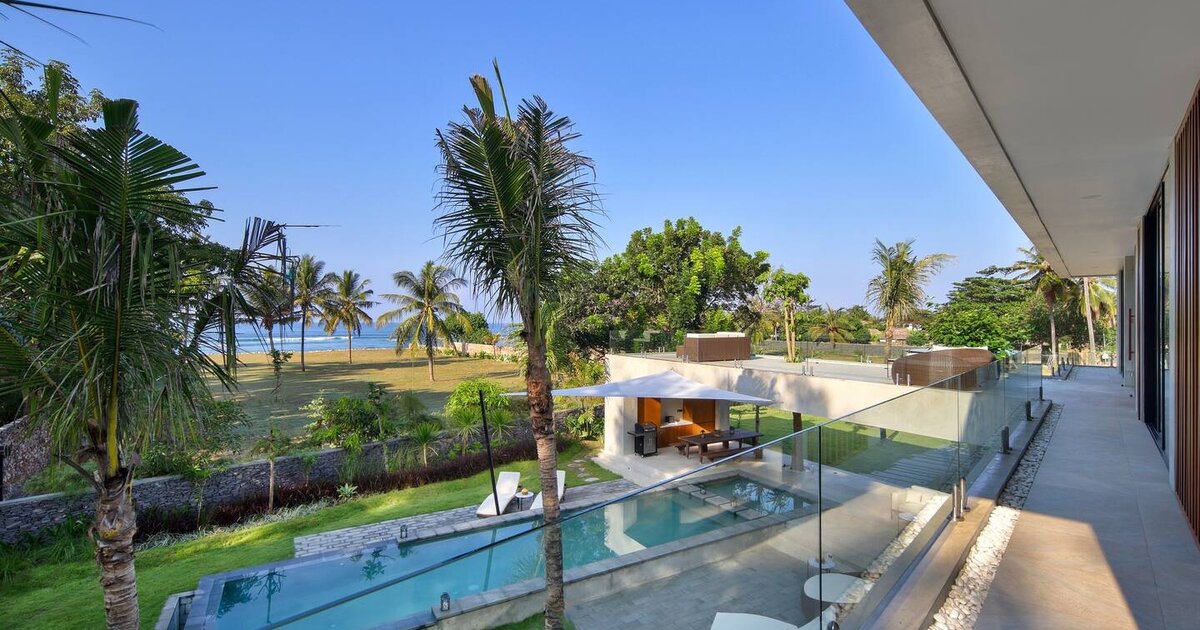
Wave Lombok is two private villas — Villa Serangan and Villa Selong Belanak — set at the back of our own beachfront estate, with the sand a couple of minutes’ walk away down a private path. We have run it ourselves, as a family, since 2022. Daily breakfast, daily housekeeping and trip planning are included, and the team will tell you each morning which beach is worth your day. That last part is more useful than it sounds.
If you want the fuller picture of how villa stays work on this coast, our ultimate guide to luxury villas in Lombok covers it properly.
And if you would like to wake up two minutes from an empty beach, you can check availability or message us with your dates — we will tell you honestly whether we are the right fit.
Ready to see the shore for yourself?